

Aug 6, 2020


Aug 5, 2020
BACKTRACK (2016)

The ghost film is my weakness. It's one I will always go out of my way to watch, regardless of pedigree or budget, because I am endlessly fascinated by the supernatural. If I were a human being still capable of actually feeling fear, instead of having been dulled by a steady diet of horror films since I was in elementary school, you might say ghost films come the closest to providing me with a handful of reasonable scares. And that makes sense--that of the more metaphysical sub-genre, the ghost film rides the closest alongside the idea of life, most certainly death, and perhaps something beyond it. The concept of ghosts and haunted houses still pervade so much of our pop culture. Even the Travel Channel has built an audience of millions off their only popular program, "Ghost Adventures," the tie that binds ghost-hunting to traveling being that the hosts often get in a van and drive somewhere.
It's rare when a good ghost film is released. And unless James Wan is directing, chances are those good ghost films aren't at the multiplex, but rather somewhere hovering in the ether between VOD and direct-to-video. Much like any other genre, but especially horror, there's a reason why you've never heard of most titles found on page 37 of Netflix's streaming titles. So much bad horror is released in one calendar year that it's almost staggering. It's also sad, because so many of these so-called filmmakers aren't trying to make a film. They're assembling 90 minutes of forward momentum and spending most of their budgets on the Photoshopped cover that does its best to shield the fact that the film isn't even worth falling asleep to.

Somewhere between this Redbox fodder and James Wan resides filmmaker Michael Petroni's Backtrack, an Australian-produced supernatural mystery that offers up a handful of fine performances, an intriguing concept, and even a few well-timed and well-staged scares that actually border on frightening. Make no mistake that Backtrack is very aware of its influences, taking most of its DNA from The Sixth Sense, but it goes about it in the freshest way possible: that the patients of Brody's Peter Bower are actually ghosts isn't a twist that's saved for third-act reveal (obviously this factoid is included in the home video release's official synopsis anyway), but rather it's something discovered early on which kicks the main conflict into gear.
Brody, too, seems aware of the influence of Shyamalan's still-best film, as he likely realized he was also playing a sad psychologist a little too close to the dead. Brody, strapping on a serviceable Australian accent, is very calm, stoic, sad, and still in his performance, but not in a way that's boring to watch. He's supposed to be playing a man barely holding it together following the death of his daughter, for which he blames himself, and it's reflected in his every scene, during which he always seems moments away from bursting into tears.

The beloved Sam Neill makes scattershot appearances as Bower's own psychologist, looking pretty distinguished in a rounder face and full beard, though the motives of his character are unclear and never fully explained, leaving his presence in the film somewhat unsatisfactory.
Above all, writer/director Michael Petroni didn't want to make a horror film so much as a film about life that just happened to contain elements more commonly found in genre films. He tried something similar with a previous film, Till Human Voices Wake Us, which could likely be used as a litmus test to determine if Backtrack is for you. Again, like The Sixth Sense, Backtrack vies to be something more than just a ghost film. It wants to be about life, regret, the significance of the past, and the pain of memories. It does all those things quite well, marrying it to a traditional mystery propelled by supernatural elements (and no lie, the use of "ghosts" in the film are definitely eerie), but what it results in feels a little too similar, however well made it may be.

Despite being a ghost movie, which, yes, does allow for a few jump scares here and there, Backtrack is actually kind of a quiet film. The dread and sadness dwell in the silent corners of every scene in which Bower appears, complemented by a melancholy score by composer Dan Cornelius. Backtrack is the kind of film whose strength comes from the quiet rather than screaming ghosts.
Backtrack is a horror film (kind of) for adults. What this means is that it's not interested in using ghosts to constantly scare the audience, but rather to make our lead character tap into his subconscious to determine why he is seeing them in the first place. Ghosts are used as a concept but not a catalyst. And, is Peter Bower seeing ghosts for real? Or ghosts from his past that won't let him rest until he confronts the memories he's long since buried? If you're looking for a straightforward haunt film, keep walking, but if you're up for something a little different and a little more mature, then give Backtrack a try.

Aug 4, 2020
SWALLOWED WHOLE BY A MONSTER

"No live organism can continue for long to exist sanely under conditions of absolute reality; even larks and katydids are supposed, by some, to dream. Hill House, not sane, stood by itself against its hills, holding darkness within; it had stood so for eighty years and might stand for eighty more. Within, walls continued upright, bricks met neatly, floors were firm, and doors were sensibly shut; silence lay steadily against the wood and stone of Hill House, and whatever walked there, walked alone."
Aug 3, 2020
THE AUTOPSY OF JANE DOE (2016)

In the horror genre, there are generally two approaches that filmmakers opt to take: the gory gross-out, or the subtly creepy. Seldom do the two ever marry into a quality final product. The Friday the 13th series contains many entries that are lots of fun, for instance, but unless your fear threshold is comparable to a six-year-old’s, there’s nothing about them the least bit scary. And, likewise, some of the eeriest contributions to the genre were able to scare their audiences while shedding only a handful of blood, relying instead on mood, unsettling camera angles, or well-timed visuals.
In very few instances do visceral imagery and subtle scares come together with success. The Exorcist is probably the most notable exception, perhaps along with The Shining, although compared to today’s standards, a modern audience might not be as impressed with either. And this is what makes The Autopsy of Jane Doe, directed by Trollhunter’s André Øvredal, such a welcome and unlikely surprise. As scripted by Richard Naing and Ian B. Goldberg, the first act unfolds in near-real time as a father-and-son coroner team are delivered a body unearthed from below the floorboards at a local murder scene – one which needs a cause of death attributed as soon as possible. With the body of the young girl now on the coroners’ table, she is slowly dissected, the parts of her examined and tagged – all of which unfolds in a genuinely realistic manner. Indeed, nearly all of this first act unfolds with an almost scientific approach, even as the coroners begin discovering that there are certain “impossible” things about the body – its condition, its reaction to stimuli, and…well, lots more. And as you might imagine, as her body is slowly taken apart, it’s extremely graphic, but never in a way that feels exploitative or vapidly shocking. The film treats this act as respectfully as we would expect a real coroner to treat his or her real specimen, and as you watch the methodology and the men’s attention to their work, you forget you’re watching something intended as horror in lieu of something more fact-based and grounded.

At the end of this act, while the mystery behind the anonymous girl’s body is being slowly put together, the graphic portion subsides, giving way to a more traditional, but no less effective or well done, series of ghostly encounters within the underground winding hallways of the Tilden family’s coroner office. Echoing the successful supernatural films of James Wan, The Autopsy of Jane Doe relies on old school techniques – and hardly any CGI – to craft a series of scares to unnerve the audience, and nearly all of them work. Glimpses of something unnatural through smoke, a mirror’s reflection, behind a crack in a door; unfortunate cases of mistaken identity – yes, they may be cliché, but when they work this well, I’m totally fine with it.
My favorite thing about The Autopsy of Jane Doe is its reliance entirely on history, mythology, and our own knowledge of both to tell its story. Thankfully (and I really doubt this is a spoiler), this isn’t a case of a girl’s spirit returning to warn the son that the father is the reason why she was found six feet under. There isn’t some lame last-minute twist that reveals either of them to be the killer, or crazy, or caught in hell, or some other overused twist that’s been done countless times before. What you see is what you get — there’s no twist coming to save the audience and relieve them from the terror that’s before them on the screen, to gently pat them on the head and say, “Don’t worry, this isn’t really happening.” It is. And, if you ask me, it’s about time that it did.

Brian Cox is a reassuring face in the genre, because – and I’ll go on record right now – he’s never been in a bad horror film. Likewise, he’s somehow managed to star in a handful of major or minor horror classics: The Ring, Trick ‘r Treat, Manhunter, voice work for the severely underrated and underseen zombie film Exit Humanity. No actor’s filmography is flawless of the occasional bad film, but it’s usually the horror genre which causes that actor’s downfall. With Cox, it manages to be the opposite. And The Autopsy of Jane Doe is no different. As usual, he’s excellent, unfazed by the disdain that many of his esteemed peers have for the genre. His younger counterpart, Emile Hirsch (making his horror debut), takes the same approach, and his somewhat picky reputation for the roles he takes additionally elevates The Autopsy of Jane Doe into something worthy of further adoration. This isn’t just some crap write-off for either actor, but something with compelling content that matches context pound for pound.
Odd as it may sound, but Øvredal designs the “dead” body of Jane Doe to look like a flawless work of art — white, unblemished skin; dark hair; and preternatural eyes. She — and the rest of the film — present as sterile and institutional but also inexplicably with an artistry seldom seen in the genre anymore. What colors there are seem bright and dynamic; during the first act, fluorescents are the only source of light, but the picture is bright and even somewhat inviting. However, as the events surrounding Jane Doe darken, so does the picture.

For much of the film, dialogue, only, is what drives the momentum forward — that and a handful of random soundtrack interludes, included repeated and increasingly creepy use of an old traditional folk song from the 1950s. But once the horror really kicks in, the musical score by Danny Bensi & Saunder Jurriaans kicks in along with it and really works in complementing the on-screen visuals that Øvredal concocts. The Autopsy of Jane Doe, like all great horror films, really makes full use of its audioscape, relying on both loud and sudden moments along with silence, or the faint sound of moving air, to unnerve.
It’s probably too early to label The Autopsy of Jane Doe as an “instant classic” as many critics seem eager to do, but it certainly deserves the same reputation as recent horror powerhouses like The Conjuring, It Follows, and Insidious, just to name a few. Horror fans are passionate people, which means they complain a lot — in a constant desire for original material, in something more than just tepid PG-13 scares. Well, here it is. Graphic and scary, and made by a handful of professionals determined to make not just an effective horror flick but an honest-to-gosh good film, The Autopsy of Jane Doe is the antithesis to the reboots, remakes, redoes, and repurposed content flooding multiplexes and streaming services everywhere. With enough graphic and ghostly content to please even the most practiced horror viewer, it’s an excellent addition to the genre that deserves far more title recognition than it might be receiving.

Aug 2, 2020
I'M HOME

"Any big hotels have got scandals. Just like every big hotel has got a ghost. Why? Hell, people come and go. Sometimes one of 'em will pop off in his room, heart attack or stroke or something like that. Hotels are superstitious places. No thirteenth floor or room thirteen, no mirrors on the back of the door you come in through, stuff like that."
Aug 1, 2020
AUGUST IS AUGHOST

I am someone who loves nearly every sub-genre of horror there is, though some more than others. My sub-genre of choice has changed over the years, from slashers to zombies to a short-lived affair with horror-action (of which there isn’t nearly enough).
But I always come back to the haunted house sub-genre. There’s something about a ghost story that feels timeless, more culturally intrinsic, and mythological. Ghost stories are passed down, told around campfires, but really, it’s because they are the most in tune with our own fear of death. In a way, all horror flicks are about death, but the ghost sub-genre forces you to postulate on what death actually is. As I grow older, I become more and more interested in, but also terrified by, the haunted house movie. I don’t see that ever going away. From big studio stuff to quiet indie stuff to completely anonymous streaming stuff – if your plot include the words “haunted” and “ghost,” then I’ll come running.
Which leads us to Aughost – the next and most awfully titled blog theme yet. Throughout the month of August, I’ll be blogging about the haunted house/ghost genre, and, as usual, I’ll be focusing on lesser known titles both great and terrible. Come with me through the creaking front door and see what horrors (or total silliness) awaits us on the other side...
Jul 31, 2020
NIGHT OF THE LIVING DEAD (1968)
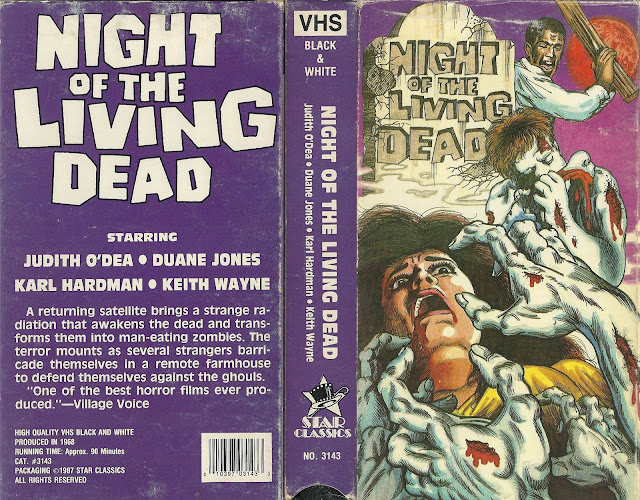
George A. Romero’s Night of the Living Dead changed everything. And I’m not just talking about the advent of “the zombie” as we know it. I’d go further and argue it planted the seed for the idea that cheap horror films usually destined for drive-ins and double-feature theaters could smuggle in themes relating to the social experience. For anyone who has closely followed Romero’s career, or at least the genesis of Night of the Living Dead, then you already know Romero has spent his entire life modestly dismissing the idea that he purposely cast a black man (Duane Jones) as Ben, the lead, as nothing more than critics reaching for something that wasn’t intended. “He was the best actor we knew,” was Romero’s go-to line, and the film’s “upstairs” versus “the basement” argument — segregated worlds — that reached a fevered pitch between two dominant men of different races, or the hordes of cops and rednecks with their snarling German shepherds, or the very end when Ben is shot down in the house in too casual of a manner, or when his dead body is handled with hooks and chains, was all just a coincidence. Romero asserts that the script was the same during production as it had been before they’d cast Jones in the lead.
I can take Romero at his word when it comes to all this. I can accept Jones got the job for his acting alone and not for what his casting would symbolize. But I can’t believe that Romero didn’t know, deep down, that audiences wouldn’t walk away from Night of the Living Dead without reading into all of that themselves, anyway. With a grin, Romero would admit he was fine with people calling him a prescient and philosophical storyteller — and if we’re being honest, he was — but he still cast an African-American man in the lead during a time when that wasn’t happening, which was further bolstered by the character of Ben being much more than just “the black guy.”
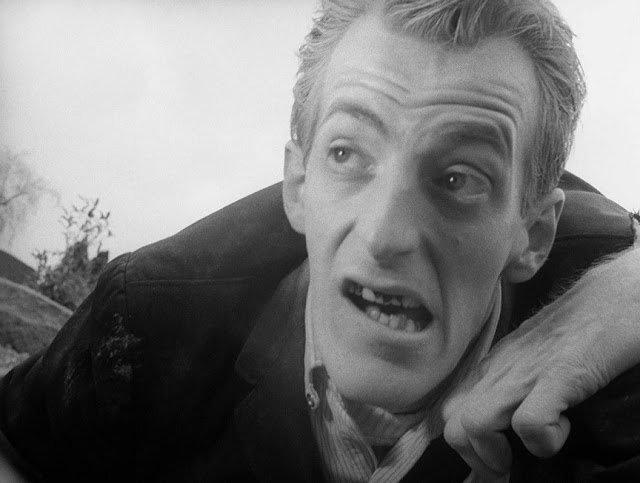
From a construct point of view, Night of the Living Dead isn’t within throwing distance of polished. It’s hasty, at times disarmingly edited, and offers a few instances of weak performances from its cast (almost all of whom doubled up in other behind-the-scenes production roles). It very much feels like a stolen film — something shot on weekends (it was) with scenes picked up guerrilla style. (Romero and co. having stolen an exterior Washington D.C. interview sequence, with Romero cameoing as a reporter, while the Capitol Building looms in the background, is one of the ballsiest moments of guerrilla film-making I’ve ever seen.) All of this aids Night of the Living Dead’s purposeful design, which was to deny the polished look of other genre films from that era or earlier (Psycho had been released eight years prior, but looked like a newer production) and instead present as newsreel footage. It was documentary-like in its use of a static camera, serving more as a witness to the tension and terror unfolding in that house without ever distracting with its fluid or showy presence. Romero wanted Night of the Living Dead to feel raw and real, and because it was made with the intent of highlighting experience over entertainment, it does.
What’s perfect about Night of the Living Dead is that you, the viewer, can manifest your own allegories about what it’s really about: racial unrest, generational rebellion (the hippie movement was in full swing), a reaction to the Vietnam war, communism, anti-establishment, and who knows what else? In the excellent documentary The American Nightmare, Romero referred to Night of the Living Dead as “one culture devouring another and changing everything,” and while he meant this about the film’s themes, he very well could have been talking about genre film-making in general. Like most genre filmmakers, Romero fell off his game in later years, going back to the same zombie well too many times, but that will never diminish his mark on the horror genre, and it will never change the fact that phenomena like the Resident Evil franchise (film and video game), The Walking Dead (and its spinoff), IZombie, Netflix's The Santa Clarita Diet, and so many other shows and film series wouldn’t exist without him. If the world is just, then, like his own zombie creations, George A. Romero will never truly die.
Subscribe to:
Posts (Atom)