Jul 6, 2019

PET SEMATARY (2019)


[Contains spoilers for the novel and both adaptations of Pet Sematary.]

A remake of Pet Sematary has been bouncing around Hollywood since 2006, ever since George Clooney and Steven Soderbergh attempted to produce it through their then-new company Section Eight Productions, which had also done Christopher Nolan’s remake of Insomnia. Clooney was even set to star as Louis Creed, patriarch and serial burialist of the Creed family. That, obviously, didn’t happen. But, after a decade of development hell, Pet Sematary has arrived, and…this is what we got.

Dennis Widmyer and Kevin Kölsch, the directorial pair behind the creepy and successful indie Starry Eyes, had their work cut out for them. Doing a remake is thankless. From the very beginning, you have two choices: stay faithful to the source material (King handled the screenplay for Mary Lambert’s 1989 take, so it’s nearly identical to the book), which will have people asking you, “Why bother?” (see: The Omen remake), or find ways to stay true to the spirit of the story while taking new chances. The danger with this latter approach is making changes that devout fans will see as arbitrary, but something about which the filmmakers can say, “See? It’s different.” Pet Sematary does this a lot—makes small, seemingly unnecessary changes. Yet, if you sat down with the redux for any five-minute segment without actually knowing what you were watching, by the end of those five minutes, you would know. It’s a familiar story with familiar characters, and certainly a familiar concept; Pet Sematary never strays so far as to become unrecognizable, but if you’re already intimate with the story, you can’t help but think, again, “Why bother?”


To its credit, Pet Sematary wants to include as much as it can from the novel that the filmmakers consider “essential,” but with everything vying for space, significant portions of these elements are spread too thin. Victor Pascow (Obssa Ahmed) is barely utilized, reduced to such a footnote that you have to wonder why the filmmakers felt compelled to include him; and despite a far more graphic head wound, complete with pulsating brain, the specter doesn’t come close to matching the former’s onscreen presence. Additionally, we’re robbed of Louis and Jud meeting for the first time, given the dynamic the two men will share and the things they will experience together; instead, we find that the men are already politely acquainted halfway through a throwaway dinner sequence. Weirdly, there’s a complete lack of acknowledgment regarding the connection between the existence of the pet cemetery and the very dangerous road that cuts through the Creed and Crandall estates, being that canon explicitly states the former exists because of the latter. Meanwhile, the Timmy Baterman story, one of the creepiest sequences from the original, is downgraded to a newspaper headline. The character of Zelda, the most terrifying part from the original and the novel, is reduced to a pile of rubber bones and limbs dropped repeatedly down an elevator shaft. (Seriously.) The mishandling of this character in particular is Pet Sematary’s worst offense.

From the first frame, even before a single “scary” thing has happened, Mary Lambert’s 1989 original adaptation oozes dread. You can feel that things will go very badly for the Creeds, and already your chest begins to tighten. For example, she knows everyone has read the book, and she knows everyone will be waiting with bated breath to see little Gage lose his life in the road. That’s why she, wisely, cunningly, even sadistically, introduces the Orinco truck several scenes before the final encounter, because she wants to milk that suspense for every ounce, interrupting a happy-go-lucky picnic more than once to cut back to the truck speeding down the road toward them. Now, when the Creeds 2.0 pull up to their new rural home, you already know bad things are going to happen—not because of any induced dread, but because you’ve experienced this story twice already, so no shit. Yet, there’s a complete lack of suspense or ominousness. The admittedly beautiful opening overhead drone shot of a burning house, which we all know to be Jud’s, is another immediate reminder that, yep, bad things are afoot, but it still doesn’t quite help stoke those brooding fires. Nor does the surprisingly lifeless score by Christopher Young, who ordinarily dominates the horror genre.  


Pet Sematary makes the same mistake as another high profile remake, Rob Zombie’s terrible Halloween: whenever the filmmakers deviate from the story audiences know and love, you can feel their spark, their interest, their excitement in exploring this new direction. But when leaning back on the mainstay elements from those same stories, you can feel their obligation to just barrel through and begin tackling all their material—to infuse the property with their identity, to put a stamp on a title that they’ve temporarily borrowed before sliding it back onto the shelf. Pet Sematary doesn’t fully come alive until, ironically, Ellie does—from the dead, that is. Obviously, this is the biggest change in this new iteration, as the filmmakers felt using Ellie as the resurrected child would provide additional pathos. With Ellie being older and in a position to understand what was happening to her, she could better echo those sentiments to her god-playing father, which was meant to boost the film’s philosophical look at death. 

But what, ultimately, did we learn from this? 

What we already knew from the novel and the original adaptation.

Sometimes, dead is better. 

As for the ending, it’s dreadful; very strangely borrowing from Pet Sematary Two, it’s made even more frustrating by the fact that the alternate ending included on the home video release is far better—gloomier, more ominous, more satirical, and more tonally appropriate. The one that went to theaters was the stuff of Hollywood hokum, rendering whatever mature goodwill the film had achieved as kaput. Screenwriter Jeff Buhler says this is because they wanted the audience to leave with a smile, which seems like a bonehead decision, being that smiles don’t belong anywhere near Pet Sematary, a manuscript King found so vile that he shoved it into a drawer upon completing it, deciding it would never see the light of the day because he’d finally gone too far. 


In spite of all the whining, Pet Sematary isn’t a bad flick, and there are several things lending to its favor. Ellie’s post-resurrection appearance is subtly but deeply unnerving; a drooping eye hints at major damage going on beneath the surface (that bathtub sequence…Jesus), and young Jeté Laurence is incredibly creepy in the role before the film falls victim to the pitfalls of the “evil kid” genre. After a while, she’s reduced to a pint-sized zombie kid using “scary” glaring eyes and coming a little too close to rattling off ironic Chucky-like threats. Amy Seimetz as Rachel is easily the film’s most interesting character, and Seimetz’s performance is a large reason why: she ably sells Rachel’s extremely mangled view of death, due to her childhood experience with her sickened sister, Zelda. Lithgow, too, does fine with the role of Jud Crandall, made iconic by Fred Gwynne, though he sheds Gwynne’s folksiness in favor of curmudgeonness. He also doesn’t even attempt a New England accent. (Not a single a’yuh! What gives!) Lastly, there’s Jason Clarke—an actor capable of much more than the scripts he signs onto. It feels weird to say, but his take on Louis never reaches the same emotionally tormented heights of the original’s fairly unknown Dale Midkiff (whose “NOOOOOOOO!” is still one of the best anguished screams in cinema). 

The filmmakers poke fun at their audience by presenting sequences they think they know, only to see they’re heading off in different directions. (Jud’s death is a perfect example.) Additionally, and I don’t know this for sure, but I’d swear they lifted audio from the original flick, borrowing one use each of Zelda’s screechy “RAAAAACHEL!” and a growl from an undead Church. There also several loving nods to King’s other works, one of which includes an off-screen Jud telling a guest at Ellie’s birthday party about a rabid Saint Bernard. Widmyer and Kölsch’s design of the deadfall and the Indian burial ground behind it is ripped right from the film cells of old fashioned monster movies like Frankenstein and The Wolf Man, depicted as dreamlike and different, since this part of Ludlow’s woods are meant to be evil and mysterious. As a concept, this is tremendous, though it suffers in execution from some surprisingly shoddy green-screen. 


Paramount’s Blu-ray contains over 80 minutes of special features, including the before mentioned alternate ending, along with “Beyond the Deadfall,” which runs an hour in length across four different “chapters.” This supplement is rich with information and content, and goes beyond your standard EPK to delve heavily into the film’s genesis and production. (Stephen King does not appear.) Sadly, however, this is yet another studio release that lacks a commentary with the directors, and in its place are strange and very brief narrative pieces where several of the flick’s major characters have their own unique nightmares about the burial ground. Finally, we do get the story of Timmy Baterman, but in a weird one-man show where Lithgow, in character, sits down and presents the story as a campfire tale to us, the audience. 

Far worse adaptations have come from Stephen King, and if you asked the man himself, even he would probably rank this new version of Pet Sematary above bonafide classic The Shining, an adaptation he never misses the chance to impugn. Even so, it’s ironic that Pet Sematary’s main conflict comes from “those damned Orinco trucks” speeding dangerously back and forth, being that this new version of the story is standing directly in the middle of the road.

Pet Sematary is now available on Blu-ray from Paramount Pictures.


[Reprinted from Daily Grindhouse.]

Jul 2, 2019

BLU-RAY REVIEW: ESCAPE PLAN: THE EXTRACTORS (2019)


The first Escape Plan is an unremarkable but admittedly fun throwback to high-concept action fare typical of the 1980s. Nearly every action star had his own prison flick during that era, and in Stallone’s case, he did it twice. (Tango & Cash totally counts.) By the time he and Arnold Schwarzenegger joined forces in 2013 for what was originally called “The Tomb” and which eventually became Escape Plan, even the critics who enjoyed the film accurately observed that such a team-up would have been the stuff of action fans’ dreams…had they done it 20 years ago. 

Escape Plan did so-so business at the domestic box office, but was a major title in China (as tends to happen with big dumb Hollywood spectacles), so when Lionsgate announced not one but two sequels, cynics were both amused and confused. That they would be mostly funded by Chinese production companies, and would star Chinese actors alongside returnees from the first film, made sense of Lionsgate’s decision. 


The first of these was Escape Plan 2: Hades, directed by master hack extraordinaire Steven C. Miller, who has had the distinct pleasure of working with Bruce Willis (three times), Nicolas Cage, John Cusack, and Malcolm McDowell but without ever making anything even approaching watchable. That Stallone doesn’t even appear in the sequel beyond a contractual 20 minutes was the icing on the cake of mediocrity that effortlessly proved why movie goers avoid direct-to-video titles whenever possible. 

Escape Plan: The Extractors, following on the tail end of this, seemed doomed.

Imagine my surprise.


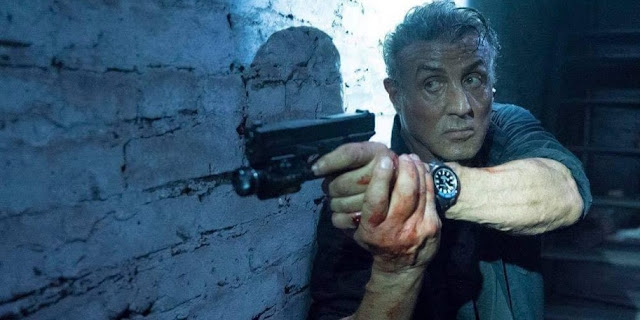
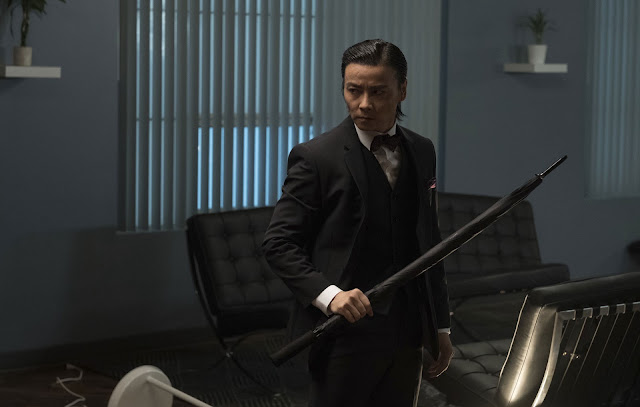
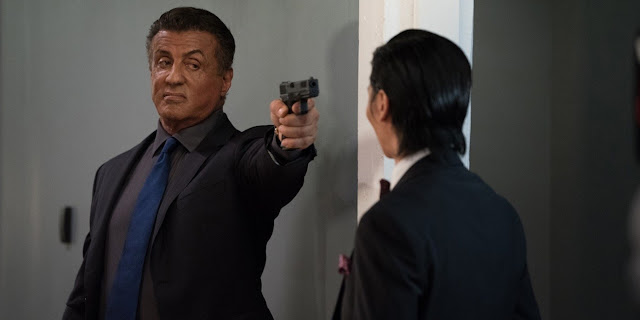
Directed by actual filmmaker John Herzfeld (15 Minutes, the underrated Tarantino ripoff 2 Days in the Valley), and with nearly every surviving cast member of Ray Breslin’s team returning (except for Amy Ryan, who is replaced by Jamie King), Escape Plan: The Extractors feels like a bonafide sequel to the first film in every way that its predecessor, Hades, didn’t. As if knowing how much of a turd the previous flick was, Escape Plan: The Extractors has dropped the “3” from its title to more closely associate only with the first film. Better yet, there’s no bait-and-switch this time. Stallone is definitely your lead hero AND actor this time out, though he shares the screen with a bodyguard named Shen (Jin Zhang), who works alongside Breslin to rescue a former asset that’s been kidnapped by the film’s primary villain. And it’s not just the familiar faces that help render this connection to the first film, but the sequel’s conflict ties back directly to the first film’s events—specifically the resolution of the character played by Vincent D’Onofrio (who appears here courtesy of stock footage). One can look at this connection and groan and say, “of course a direct-to-video sequel to an okay action flick is pulling this,” but I’m fine with it: if Escape Plan: The Extractors wants to riff a little on Die Hard With A Vengeance, I won’t stand in its way.

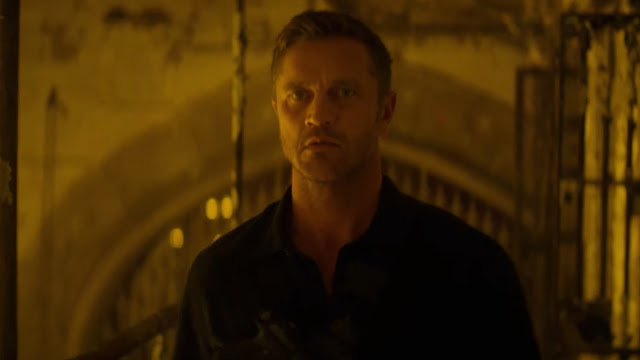
But okay, the action: that’s why we’re all here, isn’t it? Like most other quiet direct-to-video/VOD releases from Lionsgate, Escape Plan: The Extractors suffers from some really poor CGI during the action sequences, but thankfully, director Herzfeld relies on practical effects whenever possible, dialing back gunfights in favor of some genuine, hombre-on-hombre fisticuffs. The final fight between Stallone and villain Devon Sawa – yes! the cutie boy from Little Giants! – is a brutal ass-handing, with Stallone landing such heavy hits that you’ll swear you can feel them.


Future Expendable Dave Bautista returns from the second film to lend a hand in all the ass-kicking, even getting to enjoy the rare novelty of fighting his own body double/stunt man, who plays a nameless villain within the Estonian prison where the third act plays out.  Bautista, who also barely appears in Hades, is finally given something to do, and while his screen time won’t please his most ardent fans, he appears enough that no one should feel ripped off about it. (There’s very little 50 Cent, which suits me just fine.) 

The Blu-ray release offers a respectable dose of special features: a commentary with director John Herzfeld and actors Sylvester Stallone and Devon Sawa, along with a pretty typical ten-minute behind-the-scenes/interview EPK that sees participation from almost all cast and the director. Stallone talks specifically about the final fight scene and how he approached doing it, which was—for the first time in his career—to just wing it, instead of relying on careful choreography. (The fight scene is rawer and angrier than one would expect, so his experiment was a success. It lacks any kind of polished grace in favor of brute force brutality.)

In the interest of full disclosure, I could never responsibly say that this latest sequel is a good movie. The script contains some hammy dialogue, which leads to some hammy performances, and again, the conflict is ripped straight from the school of cliché, but if we’re being fair, the first flick didn’t exactly have a well-oiled script, either. In fact, since comparisons are inevitable, I can’t even responsibly say that the first Escape Plan is a good movie, but it is fun, and good for what it was. Escape Plan: The Extractors is a darker take on this world, dialing down much of the humor (a lack of Arnold will do that, I suppose) and even offering a couple of genuinely shocking moments that one wouldn’t expect to see in such an under-the-radar title. In that regard, it’s fair to say that The Extractors is a low-fi but worthy follow-up. 


Will there be further Escape Plan sequels? As of right now, none have been officially announced, though the ending teases a new adventure. Based on the reception of Hades, the future of the franchise hinges on how the world takes to The Extractors. Personally, I wouldn’t bet on Escape Plan 4, but if there’s one thing Stallone is good at, it’s proving me wrong.

Escape Plan: The Extractors hits Blu-ray today from Lionsgate Films.

[Reprinted from Daily Grindhouse.]

Jun 29, 2019

INVASION OF THE BODY SNATCHERS (1978)


Within a window of three years during the late '70s/early '80s, the world would receive two of the greatest sci-fi remakes of all time. The latter would be John Carpenter's grisly and bleak monster opus The Thing, but preceding it would be Philip Kaufman's Invasion of the Body Snatchers, itself also an update of a 1950s classic. That both films would heavily lean on the idea of those you knew being taken over by an organism from another world, rendering your former society untrustworthy and even deadly, were reactionary from a previous decade of civil, governmental, and international unrest and distrust. While The Thing was much more about the inability to trust on the individual level, 1978's Invasion of the Body Snatchers was centered on the fear of the bigger picture. The original Invasion, as the best cinema does--especially horror--was a reflection of the times--namely communism. Whether or not the film satirized the idea of communist ideas spreading like a virus, or was in essence a legit warning that such an event were actually taking place, will likely always be up for debate, but make no mistake: communism was at the forefront of Don Siegel's original invasion. It's one of the main reasons that the classic film hasn't dated all that well.

In the America of the 1970s, especially San Francisco, everything was changing. By then, Americans had grown disillusioned and angry over its involvement in the Vietnam War, and by the Kent State shooting which directly resulted from its protests. They had learned, through the Watergate scandal, that their own politicians didn't have the heart of the people in their best interests. Americans began looking to themselves for the social change they so desperately wanted. Feminism was born out of this. Culture exploded into more intense explorations of art, music, and literature. The sexual revolution. All the things the people gave to themselves while they waited around for their government officials to do the right thing.


But all during these awakenings, the people couldn't shake the feeling that the world around them, in which they existed, wasn't capable of the same kind of change. It hovered in the sky above and surrounded them on the ground below. Societal and international unrest was something that could be counteracted with positive social movements, but couldn't be quelled by them. Try as the people did to lose themselves in the art scene, at book readings, or in mudrooms, reminders of an unstable world was a constant crushing weight that, finally, overtook them all. As Kaufman says in his audio commentary, the 1970s saw the birth of pop psychology, during which psychiatrists relied on hugs and positive reassurance that everything was all right. "But everything was not all right."

Critics have been willing to lavish on Kaufman's Invasion redux the kind of praise it deserves, but reticent to label it as superior to its predecessor, even though it absolutely is. Not only does the Kaufman version feel timeless, it had the balls to carry through with its iconically bleak ending, whereas the original had original star Kevin McCarthy (who cameos in this version as a street lunatic bellowing "they're here!") waking up in a hospital bed and being told, basically, "Don't worry, America solved the whole invading alien species thing while you were asleep." Kaufman's take is eerier, more intimate, and somehow grittier. The camera moves around the room like an antsy witness to all that is unfolding, going in close and low on those who, it seems, have already been duplicated and replaced. The ragtag group of individuals embark on the same kind of grassroots movement to fight back against the invading threat that they would have utilized for giving the people back their voice and their freedoms to be who they are.


There's also, somewhat satirically, an emphasis on making our characters as forthright as they are oblivious. There are multiple instances in which characters are mired in their own personal connections to the unexplained phenomena unfolding around them, leaving them lost in thought--even as they walk by people tearing down the streets as if in a panic and being chased by something, or looking out a window for the imminent threat, somehow not noticing trash trucks collecting large dried out husks and crushing them into clouds of dust. Our characters are looking so hard for the explanation for the conflict surrounding them that they are missing what's in front of their faces. It leaves you wondering just what Kaufman was trying to say.

Are we already doomed? By the time we realize what the threat is, will it be too late?

The way this Invasion concludes, perhaps we already known the answer.


When strictly considering staying power, Kaufman's Invasion will likely be considered the ultimate take on Jack Finney's original novel, even though I'm sure there will be more iterations down the road as the people's strained relationship with their government continues assuredly down the wrong road. Forty years later, Invasion of the Body Snatchers is still a relevant mortality tale. Much in the same way George A. Romero used the same zombie threat to explore different facets of a failing society, the invading threat of alien organisms duplicating the human race one member at a time will continue to be explored in different ways, but for the same reason.

The 1970s has long been heralded as the greatest decade for film, giving birth to a cinematic movement known as the paranoid thriller, which includes titles like The Conversation, All the President's Men, and The French Connection. Included in this lineup is Philip Kaufman's Invasion of the Body Snatchers, which is not just a worthy contribution to the paranoia movement, but also an excellent sci-fi tale of immense fear and suspense, a call for social awareness, and finally, a superior remake of a groundbreaking predecessor. It's the kind of horror story that will live on through the ages, and like Richard Matheson's "I Am Legend," will be retold every so often to reflect the current times, though it's likely none of them will ever be as successful as Philip Kaufman's take.


Jun 26, 2019

DER SAMURAI (2015)


On the audio commentary included on its Blu-ray release by Artsploitation Films, producer Linus de Paoli paraphrases a former film teacher when he says that every film has to leave at least some questions unanswered, for if every possible curiosity the audience held for a certain film were satisfied, it would make that film forgettable. Nothing about that film would linger in the audience's mind. Such a philosophy has fully informed the construct of Der Samurai, which presents a lot of questions and provides very little answers. And boy, audiences do not like this -- especially the mainstream -- and Der Samurai is as far away as one can get from mainstream before traditional narrative is left behind entirely.

Der Samurai has been described as a black comedy, or a Lynchian mind-twister replete with bouts of dark humor. The first is fully incorrect, and the second is pushing it, but closer to the truth. For once you get over the fact that, yeah, you're watching what's clearly a man (or a man-shaped being) walk around in a formal dress and kill random people with a samurai sword, all while not-so-subtly trying to convince poor Jakob (Michel Diercks) to desire him, there's not that much humor to be found. A moment or two allows some levity - the scene in which Jakob violently assaults a lawn ornament flamingo is beyond surreal and kind of comes out of nowhere - but Der Samurai appears to be playing its outlandish concept very straight. And a certain understated beauty comes out of that. Or it could very well be what was intended as humor gets lost in the utter madness unfolding before you, leaving you ready to accept that this slice of oddness over here isn't meant to be more or less funny than all the other oddness surrounding it.


Jakob, awkward in his own skin, is an outcast. He doesn't maintain any groups of friends and lives with his grandmother (his parents are deceased). And the fact that he's a police officer doesn't earn him even a modicum of respect from his community or superiors. He's lonely, and likely wrestling with the fact that he is homosexual (though this is never flat-out admitted). His comfort in the presence of girls, in any way other than his role as server/protector of the people, is lacking. He sadly dreams of making a cavalier move on a pretty girl nice enough to give him a ride...but it's all in his head - a quick and stolen daydream; in actuality, he's staring out her car window, unaware of what to say or how to act.

In the same way that Tom Hanks made audiences cry over a volley ball, or Bruce Campbell wrangled tears by playing an elderly dying Elvis mortally wounded by a mummy, Der Samurai is adept at triggering a surprising melancholy reaction despite all its surrounding insanity. The Samurai, who is never named anything beyond that (and who is never actually called that during the film), makes his appearance in an ominous fashion, immediately gaining the distrust of the audience. But throughout the one long dark night over which Der Samurai's events unfold, the dynamic between our two lead characters begins to slowly change. The Samurai begins to embody many different things to the tortured Jakob: first, an antagonist; then, a leery friend; finally, a subject of sexual desire -- all before turning back around to becoming his antagonist again, only it's of a different sort: not of the sword-wielding psychopath, but of Jakob's refusal to admit who he is.


What may come off sounding like pretension is actually quite the opposite. Heavy themes aside, Der Samurai is wicked fun, strikingly directed, boasts an extremely brave performance from Pit Bukowski as The Samurai (see the film and you'll know why), and yeah, it does manage some mileage from some pretty dark gags. Seeing a man in a woman's dress taking off heads with a samurai sword is something that would likely never get old -- but lucky us, we get that along with an engaging story, likable characters, and even a tug at the 'ol heartstrings. It just may be the most unorthodox romance in the history of cinema.

Please see Der Samurai. There's no promise that you'll love it, or like it, or even understand it, but films that possess such an individuality and which circumvent typical cinematic machinations need to be supported to encourage other filmmakers to make more of them. Der Samurai offers something that films very rarely offer: the chance to experience something as graphic, thrilling, and mystifying as it is touching -- all while chopping off heads.


Der Samurai us available on Blu-ray from Artsploitation Films.

Jun 23, 2019

WISH UPON (2017)


Wish Upon feels like it should have seen release somewhere in the late ‘90s, where more fantastical teen thrillers like The Craft, The Faculty, and Disturbing Behavior were hitting theaters. There’s a certain novelty to it that, if nothing else, offers it its own identity in a crowded genre calendar. That Wish Upon also serves as the ultimate morality tale, heavily inspired by the immortal short story The Monkey’s Paw, too, helps it to stand off from the rest.

Otherwise, Wish Upon is woeful and inept to the point of accidental amusement, and you’ve got to hand it to the screenplay for being filled with such random bits that don’t really lead anywhere and offer any explanation. Joey King’s Clare is still haunted by the suicide of her mother a decade before, and with King consistently doing solid work in some popcorn favorites (The Conjuring, White House Down), the audience likes her because she’s a likable and spunky lead. She’s, rightfully, the foundation of Wish Upon, and her talents are a good start to a pic that otherwise goes amusingly off the track, and which introduces so many befuddling elements.

Like:

Why does Clare’s father (Ryan Phillippe) trash-pick professionally instead of just getting a job? 

Why does his passion for the saxophone never amount to anything

Why doesn’t their next door neighbor (an utterly wasted Sherilyn Fenn) seem to mind at all that she lives directly across the street from a family who has let their lawn grow over with weeds and is covered sky high in piles of trash?

Why is Jerry O’Connell in this for a ten-second cameo where he does nothing but scream?

What’s with the casual prejudice, like having the gay teen boy at a slumber party sleep on the floor half-in/half-out of the closet, or a scene in which Clare bribes a Chinese girl with “wontons”?

As Clare makes increasingly selfish and stupid wishes even after it’s established that they not only come true but KILL ANOTHER PERSON, are we supposed to be screaming “YOU MORON” at the screen?

Wish Upon entertains, there’s no doubt about that, and though it lacks the more interesting directorial flair that John R. Leonetti brought to Annabelle (even if he was borrowing from James Wan), the story at least keeps you engaged in a “how badly is Clare going to fuck up her life?” kind of way.

If nothing else, please watch this for the twist ending, which I imagine was supposed to be very shocking and very sad, but instead results in instant hilarity.

If you have a bratty teen son or daughter who needs a reality check, maybe you could make a case for ever finding a useful reason for Wish Upon. Or, if you were looking for unintentional amusement (or if you’ve always wanted to see Ryan Phillippe pretend to play the saxophone), you could do a lot worse. 


Jun 17, 2019

US (2019)


At this point, Jordan Peele is only two films into a career as a director, and already he’s successfully established his own brand – as easily, or even more easily than M. Night Shymalan did when he debuted with The Sixth Sense all those years ago. Effortlessly, Peele has established what a Jordan Peele film looks like, feels like, and what it’s about. This branding, of sorts, becomes apparent as early as the opening credits for his newest film, Us, over which plays an unusual, vocal-driven piece by composer Michael Abels. However, Peele isn’t interested in regurgitating his race-based runaway film debut, Get Out. This time around, despite a similar satirical look at American culture as it pertains to wealth disparities as well as its “work hard/play hard” mentality, Us’s story is more comfortable rooting itself in a higher-concept, almost Twilight Zone-inspired environment. What that means is US more comfortably resides in the horror genre, which, I would think, makes it a bit more accessible to viewers put off by his race-driven debut.

Get Out, while injecting a healthy amount of humor into the horror, is an angry film. Though the anger is well-disguised, it delved heavily into matters regarding racism, and more specifically, cultural appropriation. Us packs more of a visceral punch, leaning more on violence and gore gags than Get Out did, but without rendering it as strictly pulpy but ultimately empty horror. Us has every bit a purpose as Get Out, but it strives toward different goals in presenting that purpose to the audience. 


If you’ve seen Us and delved into the subtext contained within, by now, you’ve likely seen interviews with Peele in which he breaks down the film’s most mooted line of dialogue: when Adelaide Wilson (Lupita Nyong’o) asks her family’s terrifying doppelgangers who they are, her shadow double, named Red, replies simply, “We’re Americans.” What may sound like an abstract answer is a pretty blunt statement from Peele about the origin of his screen monsters. They don’t hail from a distant land, or planet, or another dimension. They are flesh and blood and they exist in the same country as “normal” Americans. They just happen to exist below it instead of on its surface. (I’m assuming that the title Us is a play on “the U.S.”)

Even if you’re not interested in subtext (and Peele’s films are designed to be at least engaging and thrilling if you’re not), Us still packs a hell of a horror wallop. The opening sequence in which a young Adelaide wanders off from her drunken father and across a nighttime beach with a lightning-infused sky behind her feels wrong, but we don’t yet know why. And once she ends up in an isolated carnival house of mirrors where she encounters her equally young double for the first time, it’s unnerving, but again, without relying on anything obviously scary. And as for the doppelgangers’ first long-shot appearance, forget it: it’s fucking eerie, especially when Adelaide asks her husband, Gabe (Winston Duke), what’s out in the yard of their vacation home, and he responds, in total befuddlement, “It’s…a family.”


Putting the horror aside, Us is also unexpectedly poignant and beautiful at times, especially during the final act when Adelaide has her final encounter with her subterranean double, and in an unexpected moment of connection between them, Red tells Adelaide, “If it weren't for you, I never would've danced at all.” In spite of the horror we’ve seen Red and her brood inflict upon Adelaide and her family over the course of Us, we’re still taken aback by this moment of…what is it? Empathy? Understanding? Appreciation? Maybe resentment, as Adelaide dancing on the surface of the earth was the thing that made Red realize just how empty her existence really is?

And, lastly, there’s the humor. As expected, based on Peele’s comedy beginnings and the light touch he administered throughout Get Out, Us also manages to be very funny at times, with Winston Duke’s Gabe stealing nearly every scene he’s in. Tim Heidecker, from the insane Tim And Eric’s Awesome Show, Great Job, and Elizabeth Moss (Mad Men), appear as friends of the Wilson family, which leads to some amusing exchanges between the two, getting a lot of morbid mileage from what appears to be a near-loveless marriage. (That their vacation home is much more opulent than the Wilsons’ is a sly comment on wealth disparity.)

Us is absolutely no sophomore slump. Every bit as worthy as Peele’s celebrated and critically adored debut, and perhaps better, Us is horrific, poignant, and somehow hilarious, solidifying Peele’s place as a fresh new voice in the genre. Whether or nor you’re on board with Peele’s approach to the genre, his is a voice that the genre desperately needs right now, if nothing more than to remind critics and audiences that the genre is capable of so much more than what we often get -- more importantly: that it’s just as deserving of the celebration and conversation as more mainstream genres. 


[Reprinted from the Daily Grindhouse.]

Jun 15, 2019

THE VHS EFFECT: FAREWELL TO A FRIEND


It started off innocently enough.

“Maybe I’ll just upgrade JAWS. I hear the picture on the new DVD is excellent. And it’ll be nice to get rid of this bulky two-tape version.”

My intentions were good. Even pure. Why not obtain my absolute favorite film at its technical best? Why couldn’t that be the lone exception to my otherwise “VHS only” mindset? It’s not like buying one DVD would open the door to ditching all my VHS tapes.

No way that would happen. No. Way.

…But it did.

The transition was slow. Barely noticeable. At first my reasoning dictated that the titles I chose to upgrade had to benefit from the dynamism that only DVD could offer.

Die Hard.

The Perfect Storm.

Even Speed!

And then there were the less showy films I absolutely loved and wanted at their best.

Session 9.

To Live and Die in L.A.

Ace Fuckin’ Ventura.

It just got way out of control way too fast. Before I knew it, I was trading in tapes hand-over-fist, or selling them online for substantial cash. I was delighted to accumulate shelf space; to regain “the whole film experience” (a widescreen aspect ratio); to look at my VHS collection with a more critical eye and determine if I really, truly needed to own Mountaintop Motel Massacre. (Spoiler: I did. But I would realize it far too late.)

My first VHS purchase was a Blockbuster exclusive release of John Carpenter’s Halloween. It was 1995, I was in fifth grade, and I had ridden my bike six miles to obtain it. For ten years following, I would be an avid collector, amassing well over a thousand tapes (including seven different VHS iterations of Halloween). Stacks of tapes were brought home nearly every weekend, and from multiple choice spots--from the shiniest Hollywood Videos to the scummiest farmer's markets. Special excursions, reserved only for every so often, found us in nearby cities in video stores bigger than libraries, and it was there that you could actually purchase titles off the rental shelf. Personal points of pride during this rich period were Return of the Living Dead, Phantasm III, and Eraserhead, in their original, uncut cases. I planned it so that my one thousandth tape purchase was Freddy vs. Jason, a film I not only unabashedly loved, but which also represented the culmination of the franchises that cemented my love for the genre at a young age. My last tape purchase would be Tod Browning’s macabre masterpiece Freaks, two years following the release of the final VHS tape by a major studio (David Cronenberg’s A History of Violence).

During this recent VHS resurgence, commemorated by the loving retrospective documentaries Rewind This! and Adjust Your Tracking, I’ve found myself looking on in sad awe at the featured collections not unlike the one I used to have, recalling my own oddball titles, and whispering to the impassioned collectors on screen, “I used to be one of you.”

VHS was magic. A time capsule. A revolution. The next step in loving film. No longer was the flickering picture on the silver theater screen confined only to your memory, nor was the one-time chance to catch its rare airing on broadcast television your only redemption. You could wait, patiently, for West Coast Video or your local mom-n-pop store to begin selling off their excess rental copies of Teenage Mutant Ninja Turtles: The Movie, or you could snap it up on release day, brand new, for a paltry $99. Either way, those pizza-loving heroes in a half-shelf had to be yours—and they would be, at any cost.

VHS encouraged casual film fans to become collectors, and organically, these collectors became cineastes, swapping tapes with gleeful conspirators, clamoring to see the newest, greatest discovery. Little-seen films spread from person to person like a beautiful virus. Small films that made small splashes in theaters were appropriated by legions of fans and eventually became favorites. It no longer mattered that The Monster Squad failed to ignite at the theatrical box office; on video, it would, instead, ignite the imaginations of horror-loving children (as it did mine)—over and over again.

Like most things, VHS wasn’t fully appreciated until after it had passed away. DVD had taken off like a rocket, so the purging of this magnetic tape technology was a sad inevitability. But the change didn’t really hit home until video stores went through their own transformation. No longer on their shelves were there handfuls of warm, inviting cardboard covers stuffed with styrofoam blocks proudly showing off a reworked iteration of the film’s theatrical poster; in their places were cold plastic cases in capitalistic amounts, labeled in sterile company fonts, automaton-like in their uniformity.

In the beginning of the DVD transition, everyone had questions.

“What does that mean for the ocean of VHS tapes already in the world? What about someone like me who refuses to upgrade to DVD? What if I accidentally break or lose my copy of Batman or Clerks? Will studios still be making new ones? And what if my VCR takes a shit? Will stores still carry them? How much longer will VCRs be produced if companies are no longer putting newer films on VHS?”

“What’s going to happen to my collection?”

Overnight, VHS went from a premier technology to a clunky pile of hard plastic stacked in every corner of every living room, where certain titles would be cherry-picked before the leftovers hit the goodwill box or garbage can. This thing that had literally changed the way people discovered and loved films had instantly been looked upon like a bad dream: quivery picture, the “pan and scan” frame, and except for the very rare release, no special features to speak of.

We even had to rewind them! What cavemen we were!

VHS to DVD was a massive quality upgrade—we know this—but there’s no denying that it left much of collecting’s magic behind. Sure, films had become available in their directors’ original aspect ratios, with their preferred color timings permanently locked into that digital sea of ones and zeroes, never to fade as their magnetic tape counterparts began to dissolve. Mind-blowing releases like Anchor Bay’s four-disc Dawn of the Dead provided fans with every alternate cut of their favorite film to enjoy, and massive supplements to pore over—all which provided fabulous new heights of appreciation for a horror staple. Admittedly, it was an exciting time to be a film collector—especially horror. But for each title resurrected in a brand new digital release, a little mystique was taken from it in the process. Because certain films wear their age and budget like a badge of honor. George A. Romero’s Dawn of the Dead is one—a low-budget, late-‘70s, semi-sequel to his bonafide classic Night of the Living Dead. If you’re like me—born after the theatrical bows of many 1970s-'80s classics and therefore were only able to experience them in your friends’ basements—you discovered Dawn of the Dead like I did: with a forbidden VHS tape, smuggled into the house behind your back, to be played only after double- and triple-checking that your mother had gone to bed for the night.

Films like Dawn of the Dead felt forbidden; relics from another time; created and then instantly forgotten. Same for The Texas Chain Saw Massacre, or The Hills Have Eyes (films that actually play better the shittier they look). Without previous knowledge of that baggage “classic” label, they felt dangerous and not meant for human eyes, and this feeling of obscurity became married to the entire VHS format. There was an excitement in going to record-and-tape traders, pawnshops, yard sales, and flea markets, never knowing what you would find. Forget Dawn of the Dead—stumbling upon those really aloof titles like Crazy Fat Ethel 2, or Dead Meat, or this fever dream I once had called Gore-Met: Zombie Chef from Hell, felt tantamount to discovering pornography at thirteen. It was exciting to explore this uncharted territory, always with the sensation that you should not be doing this. Because…anyone could make a film and put it on VHS. And knowing that, what madness awaited you? Sliding a mysterious tape into your VCR became Russian Roulette: you had no idea if you were going to have the best night of your life or the worst. Films of this questionable pedigree felt even more forbidden post-DVD when knowing these particular titles hadn’t been salvaged and transported into the new format. And maybe they never would be. Maybe VHS copies and the occasional one-sheet sold on eBay would be the final sign, long after their original casts and crews have died off, that these films actually existed. For every schlock title like The Pit or Burial Ground: The Nights of Terror that was resurrected for DVD, a little magic was lost. Films that felt like your little secret suddenly had Amazon description pages and appeared in DVD review columns of print and online publications. People hadn’t forgotten these films existed after all, and it ruined the fun—just a little.

If that weren't bad enough, there was, and is, another issue plaguing collectors—the physical tapes themselves.

Within the recognition that nothing lasts forever, the very components of VHS technology are especially temporary. With each viewing of your film of choice, the magnetic tape within degrades—just a little. Incrementally. Over time, your repeated viewings begin to manifest in the form of scrolling lines, fuzzy scenes, or a white flash-bang explosion as your VCR struggles through two inches of splicing tape. Whether you watch that VHS religiously, or once every few years, the clock is ticking on its integrity, and there is nothing you can do about it. Store it in the most ideal environment, sans humidity, temperature-moderated, sealed in plastic—that tape is going to rot. While this is the worst aspect of the technology, it’s also a philosophy that should extend to every aspect of your life. Your relationships, your passions, your life’s work—it’s all as temporary as your copies of Split Second or Pumpkinhead 2. Nothing lasts. Everything is fleeting.

Cherish what you have while you have it.

One sole VHS tape remains in my semi-possession—via joint ownership with a chap named Brian, my good friend of many years. The final holdout to have survived my magnetic tape purge—my love for it, and what it represents—is a constant reminder of what I gave away. Yes, that used copy of Commando I’d purchased for three dollars all those years ago is still going strong. (It’s outlived two VCRs and is currently dominating a third.) It doesn’t play nearly as well now as it did thirteen years and three hundred viewings ago, but it’s still willing to tell us the same thrilling story of rescue and revenge and absurd masculinity, now sporting an array of scrolling distress lines over the scenes we rewind over and over. (They usually involve Sully.) Effort is made to watch it at least once a month when we get together—even just a few minutes. We easily pick up where we left off, whether it’s John Matrix leaping from an airplane’s landing gear or arch villain Bennett waxing philosophically about the worth of men. Like a good friend, the film stops when the night ends and loyally waits for us to pick it back up at our next session. That tape might as well be a photograph, or a journal entry. It has played over and over during bad breakups, first houses, new jobs, the passing of family and friends. It’s captured life, in snippets, and it represents me: what I love, who I love, and the simple things that bring me pleasure. (And as John Matrix always says, “Don’t deprive yourself of some pleasure.”)

One of the most conflicting movements in recent years has been that of the VHS revival. Like vinyl, which had momentarily regressed into an easy punchline to signify someone’s out-of-touchness with the times, the VHS resurrection is romantic and inspiring...but also a little sad. It’s romantic because this very people-led rebirth, far from the money-driven clutches of film studios or distributors, is refusing to let the format die. These collectors of the past are traversing the world to find the most random title, the most obscure release, to rescue it from the tote or shelf or cardboard box where it’s spent most of its post-digital life—all to give it a permanent home.

That’s a beautiful thing, and they are beautiful for doing it.

But the VHS rebirth is, like I said, also a little sad.

Because, well…

I used to be one of them.


[Reprinted from The Daily Grindhouse.]

Jun 13, 2019

BLU-RAY REVIEW: BLUE VELVET (1986) [CRITERION COLLECTION]


Filmmakers come and go, and while some of them manage to make some fantastic films, very few are lucky to have a style—something that makes their names and their films synonymous with each other—something that, if you’ve seen previous films from that same director in the past, you’ll immediately recognize as being part of his or her oeuvre. One of these filmmakers, absolutely, is David Lynch.

1986’s Blue Velvet almost serves as a precursor or a spiritual prequel/pilot to his most well-known work, Twin Peaks. After all, both are about the discovery of a dead body (in Blue Velvet’s case, an ear) leading its lead investigator (in both cases, a gentle Kyle MacLachlan) down a rabbit hole of depravity, surreality, and total quirkiness. Both take place in small towns whose economies are driven by the lumber industry, both boast a small charming diner where young lovers meet and conspire, and both even feature its hero investigator oddly and enthusiastically commenting on his drink of choice.  (“Man I like Heineken. Do you like Heineken?”) 

If you’re familiar with Lynch’s filmography, you’ll know that he is capable of offering a very broad approach to filmmaking. He’s done straightforward, accessible, and even mainstream films like 1980’s The Elephant Man or the Disney-financed true-life tale The Straight Story, all the way across the spectrum to the downright experimental and nearly inaccessible Inland EmpireBlue Velvet falls somewhere in the middle of the accessibility scale. The plot, while existing in a strange landscape filled with stranger characters and even stranger motivations, is straightforward. If you’re paying attention, you remain keenly aware of the plot and its various machinations. Blue Velvet isn’t one of Lynch’s vehicles where you turn to look at your movie-watching partner and admit, as the credits are rolling, that you have no idea what’s transpired those previous two hours. 

Having said that, Blue Velvet is still absolutely an acquired taste. The plot is easy to follow, but that doesn’t make the film easy to watch, which mostly (but not fully) has to do with Dennis Hopper’s astonishingly unhinged performance as crime boss/sexual deviant/rapist/murderer Frank Booth. Lynch and Hopper, in cahoots, created one of cinema’s most unseemly, discomforting, psychotic characters. Booth, sucking back on an ammonia nitrate tank, can either slither across the screen, or come barreling across like a wrecking ball gone rogue. (Hopper shares an amusing anecdote in an interview featured in this release that details how he’d suggested to Lynch that Booth be sucking on ammonia nitrate, rather than the originally intended helium, as the former has chemicals that can alter the mind. Helium does nothing for a body’s biology rather than giving its user a high-pitched cartoon voice, and Hopper recollects thinking, “David Lynch is out of his mind,” realizing after the fact that using helium would have made Frank Booth even crazier.) There aren’t enough synonyms in the world to convey Booth’s sociopathy and Hopper’s dedication to bringing him to life, making him as terrifying as possible. 


Normally, Lynch likes to dangle clues in front of the viewer, allowing them to piece together the story—if not Lynch’s own intention for his story, then at least enough for the viewer to forge his or her own interpretation. Blue Velvet’s opening moments take care of this handily, leaving no room for debate: opening shots of a quaint and charming town, a smiling and waving fireman with his faithful station house Dalmatian at his side, and just behind him, rows of picket fences and perfect blooming roses. But the camera doesn’t stop there, at surface level—instead, it dives deep beneath the grass where those roses grow until coming up on a horde of subterranean insects clawing and climbing over each other, filmed in icky close-up, giving them beastly proportions. Beneath perfect suburban sprawl, Lynch posits, lies its seamy underbelly. 

In fact, compared to head scratchers Lost Highway and Mulholland Dr, neither of which offer an easy path to at least one interpretation, Blue Velvet is seemingly about so many things: it’s a sobering and exaggerated look at fear of commitment, a skewering look at suburbanism, and even a comment on sexual domination. In ways that go beyond the physical, its three primary leads are all guilty of rape in their own way: Jeffrey’s insertion of himself into Dorothy’s life and the extended sequence during which he spies on her from her closet as she suffers a sexual attrack; Dorothy’s subsequent discovery of him and their near-sex scene that she administers at knife point; and most obviously, Frank Booth’s perceived ownership of Dorothy’s body to satisfy his most depraved needs. Everyone is looking to everyone else to fulfill their own unhealthy desires, some of whom simply want it, while others seem to think they need it. Jeffrey looks to Dorothy to satisfy his fantasies that go beyond boring suburban sweetness (Laura Dern’s character, in effect), Dorothy looks to Jeffrey for comfort, and Booth, well…Booth is out of his mind, and wants simple, animalistic satisfaction. 


MGM, back when its home video division gave a damn, previously released Blue Velvet to Blu-ray for its 25th anniversary with commendable results. However, eight years later, the Criterion Collection have given this Lynch favorite a stunning upgrade in every sense. The PQ on this release is staggering—near perfect and crisp, but without sacrificing any of Lynch’s typically hazy, soft, and dreamlike environments. Criterion wisely ported over MGM’s 70-minute retrospective, “Blue Velvet Revisited,”which offers a staggering amount of information on the production. Nearly every major cast and crew member are on hand, including archival VHS-era interviews with Lynch. The newly produced featurette, “It’s a Strange World,” catches up with a few crew members, including props master Shaw Burney (who claims credit for Dean Stockwell’s utility light karaoke microphone), and Steadicam operator Dan Kneece, who recalls with discernible wonder how Blue Velvet was not just an opportunity to collaborate with the director, but that it was the first of many over the years; Kneece has shot nearly every single one of Lynch’s features since then. Rounding out the special features are an interview with frequent Lynch composer and unexpectedly Bronx-accented Angelo Baddalamenti; “Test Chart” - vintage test footage; “The Lost Footage” - a collection of deleted scenes and alternate takes; and “Room to Dream” – an audio recording of Lynch reading from his recently released memoir.  


If this reviewer’s words carry any weight at all, then Blue Velvet is Lynch’s masterpiece along with Lost Highway, and this new release from the Criterion Collection is the easiest recommended upgrade in the world. Besting its previous incarnation in every way, Blue Velvet continues to live on in the way that it deserves, and joins its colleagues Eraserhead and Twin Peaks: Fire Walk With Me in the famed Criterion Collection closet.

[Reprinted from Daily Grindhouse.]

Jun 12, 2019

THE INCIDENT (1967)


There is a very real psychological phenomenon known as the bystander effect, which deduces that the more people present during an event which would normally require intervention to diffuse a violent or traumatic conflict, the less likely that anyone will do so. Basically, if two people witness something where intervention would be necessary, those two are more likely to intervene than if ten or fifteen people were at the same scene. The idea is that the feeling of responsibility for coming to someone’s aid becomes dispersed amongst all those who are present, and with everyone waiting for another individual to make the attempt, no one ultimately will. (Yay mankind!)

The Incident, which plays out as a bleak and uncomfortable combination of 12 Angry Men and The Taking of Pelham 123, is a cinematic embodiment of this phenomenon and a fascinating character study about fear, anger, racism, and loneliness. Like a Frank Weegee photograph come to life, the black and white photography not only captures the seediness and despair of a late ‘60s-era New York, it also provides every single character with an implied backstory about his or her experiences. Before they end up on that fateful subway train for an excruciating real-time 45-minute ride, we meet every single character. None of them are at particular high points in their lives: many are angry; some are victimized by their husband or wife or lover; some are excruciatingly lonely and looking for intimacy; and some are in a bad way and need help from someone waiting for them on the other side of that subway train ride. These characters bring their backstories and personalities to that subway ride and colors how they will react to the conflict unfolding within. 


Director Larry Peerce and writer Nicholas Baehr made a very New York film that is not complimentary of New York. Every single character is in a bad way; no one is happy. People aren’t just being victimized by two hoods on a train (with two audacious and excruciating performances by Martin Sheen and Tony Musante); they’re being victimized within their relationships, or by society at large, or by their own lives or desires. And on that subway train, some riders speak out against their harassers, begging them or even ordering them to stop. But some don’t. Some ride in silence, shying away from their harassers or even falling for their mock empathy. How some of these riders react to their torturers mirror how they reacted to their own partners before stepping onto that train. Likewise, those riders who exerted dominance over their own partners were soon dominated by one of the two hoods. It’s bloodcurdling yet fascinating to watch unfold — like a car wreck on the side of the road, only the audience sees it unfold in real time.

As the tension on the train car increases, the audience wants it to stop — would, also, like some of its characters, beg for it to stop. And an idea begins to creep in that there are a handful of young and able-bodied men on that train who could easily, if working together, disarm the two punks. But no one ever has that idea. Sure, as one after another they are victimized and terrorized, they trade awkward glances to other riders with pleading eyes, hoping for someone to intervene. But no one does. Everyone cowers, even behind those making empty threats to call the police — somehow, on a subway train, traveling 60 miles an hour.


For those who have never before experienced The Incident, it sneaks up on you like a sucker punch to the gut, sending you to your knees. It’s ugly, and bleak, and very cynical, and when it’s over, you walk away feeling as if you, yourself, were on that same subway train. There is very little physical violence used, beyond the very opening and the very closing of the film; throughout, however, it’s very psychologically violent, and doesn’t make for an easy watch. 

Those with strong stomachs and an affinity for challenging cinema need to ride this train. Those who don’t need the reminder that in this world it’s every man for himself need to get off at the next stop.

The Incident is now available on Blu-ray from Twilight Time.

Jun 10, 2019

LEPRECHAUN RETURNS (2018)


Despite rampaging through dozens of horror franchises over this long and broken life, I can’t say the Leprechaun franchise was ever one of them. Having seen and shrugged at the first film a couple times, I only ever saw bits and pieces of the next two sequels before stopping for the sake of my health. Unregrettably, I never followed Warwick Davis to space, or to the hood, or…back 2 tha hood. Except for the Puppet Master series, I’ve never cared less for a long-running horror fiasco. 

With the series being softly rebooted several years ago (for television), and with Davis declining to return to the role for personal reasons, it seemed like the franchise was on its way into further obscurity. Still, with the announcement of the latest entry in this series, titled Leprechaun Returns, there was one thing about the production keeping my interest: director Steve Kostanski, one of several members of filmmaking/comedy troupe Astron-6. So far, these Canadian gents have been responsible for the horror comedies Father's Day, a send-up of satanic sex thrillers from the ‘70s, and The Editor, also a send-up, this time of the giallo sub-genre…and also from the ‘70s. To each production, they brought their appreciation for genre filmmaking (and its history), their absurd sense of humor, and—my favorite—their preference for practical effects over CGI. Kostanski served as director for both of those films, along with The Void, the troupe’s crowd-funded, non-comedic horror flick that served as an homage to the likes of Clive Barker and H.P. Lovecraft. Though I’ve remained ambivalent regarding the Leprechaun franchise for equally as long as I’ve known of its existence, I opted to give it a spin to see what Kostanski could bring to the pint-sized table. 


While I can’t say this is a flick I’d ever watch again, I fully admit to having a better time with it than I expected. After all, Kostanski was riding solo, not bringing any of his troupe members along for the ride, nor did he originate the screenplay (as that duty went to Ash Vs. Evil Dead screenwriter Suzanne Keilly). Despite that, Leprechaun Returns boasts a fairly consistent and dependable sense of humor, some of which rides an air of self-awareness with respect to the genre, the series specifically, and current culture at large. (Once you “get” the joke that a bunch of college students are trying to turn a small soon-to-be sorority house “green” (hey, like a leprechaun!), you will groan groan groan.)

Taking a page from the likes of Halloween ’18, Neill Blomkamp’s abandoned Alien 3, and the forthcoming Terminator: Dark Fate, Leprechaun Returns delouses the entire series and serves as a direct sequel to the very first Jennifer Aniston-having flick. Generally, this approach can bother series loyalists (to this day, fans are still hoping for a new entry in the Halloween series that directly continues the events of 1995’s Curse Of Michael Myers --  I’m sure Paul Rudd is achingly awaiting that call), but at this point it’s doubtful even the most die-hard Leprechaun fan is worried about such richly accumulated lore being discarded in exchange for a clean break. Solidifying this “direct sequel” approach is the return of Mark Holton, reprising his role of the slow-witted Ozzie along with a small reappearance by Jennifer Aniston…sort of. In addition, the original set—a house in the middle of a sandy nowhere—has been faithfully rebuilt.

Taking over for Aniston is Taylor Spreitler, who plays Lila…the daughter of Aniston’s character from the first film. Normally these sorts of moves are rife for eye rolls (the latest entry in the Tremors series, A Cold Day In Hell, pulls a similar move by introducing the daughter of Kevin Bacon’s character), but with Leprechaun, I’ll allow it, because this franchise exists within its own rules when it comes to suspension of disbelief. It also helps to create tension among the cast once Lila confesses within fifteen minutes of movie time that her mother was insane…but that she’s also seen a tiny leprechaun stalking around, so maybe her mother wasn’t insane. Spreitler isn’t your typical “final girl.” While she satisfies the requirements of being somewhat of a loner, not interested in the same kind of debauchery of her friends, and the only one with a backstory that offers her some additional characterization, she’s also keenly aware of how absurd their threat has become—especially once a familiar face returns to offer her some ghostly help. Leprechaun Returns frequently comments on the genre and overwrought movie making, nearly surrendering to certain tropes that we expect to see in movies of this type before noting—literally out loud—that, in fact, certain things are actually terrible ideas. It’s not exactly Scream-caliber commentary, but it’s appreciated all the same, and Spreitler offers the kind of dry delivery that’s required to drive this meta-approach home.

Linden Porco takes over for long-time series presence Warwick Davis and also for pro wrestler Dylan Postl, who appeared in 2014’s Leprechaun: Origins. Under all the heavy make-up (the Leprechaun gets an eerie makeover with a more Krueger-esque approach), and his voice disguised by a thick Irish brogue (and all the terrible puns), Porco seamlessly transitions into the role. Series die-hards will know the difference, but the more casual horror fan will neither notice nor care. 


The real star of the flick is the reliance on practical effects. Except for a fiery third act and some very slight digital addendums used for touch-ups, Leprechaun Returns’ effects are done practically, bloodily, and very gooily. Despite having debuted on television for Sy Fy (a video release wasn’t even planned until the fans demanded one), the flick is gruesome and gives most theatrically released slasher flicks a run for its pot o’ gold. Kostanski’s background proves this was a purposeful choice, along with his amusing nods to other horror properties (there’s a Jaws nod that is both stupid and charming). 

Leprechaun Returns isn’t enough of a triumph to cause a wild reversal and convert me to series loyalism, but I’m glad I watched it. It was good for a handful of laughs, a bigger handful of bloody carnage, and despite not being a fan of this series, the nods to the original still manage to work on that nostalgic level. Franchise fans will likely enjoy this, along with non-fans who still enjoy a bawdy, bloody, and broad good time.


[Reprinted from The Daily Grindhouse.]

Jun 8, 2019

HOLE IN THE GROUND (2019)


The evil kid sub-genre has been kicking it at least since 1956’s The Bad Seed, but was certainly most popularized following the release of The Omen in 1976. Richard Donner’s anti-Christ fable is still considered one of the all-time greats released during film’s pinnacle of the 1970s, having inspired three sequels, a remake, and a short-lived television series. Ever since then, most evil kid flicks have taken its page from The Omen just a little, and in some situations more than others, it absolutely shows.

I say over and over that I don’t care how many times you repackage the same horror concepts and tropes. So long as your flick is well made, lacks pretension, and adds just a twist of freshness, I’m on board. (For example, I adore The Conjuring, even though it tells one of the most derivative stories possible in the genre.) And that’s where The Hole in the Ground comes in. 


Possibly based on the short story “The Samhain Feis” by Peter Tremayne, about a woman and her young son escaping a miserable husband/father to a cottage in Ireland where the son becomes possessed (maybe) by an ancient spirit, director Lee Cronin makes his feature directorial debut in this familiar but well-made supernatural tale. As noted, it treads similar ground to Tremayne’s short story, although now instead of an American woman traveling to Ireland with her son, it’s Sarah O’Neill (Seána Kerslake, who looks like a combination Rebecca Hall/Ellie Kemper) locating a quiet, out-of-the-way place in her native Ireland to take a moment out and raise her son in peace. (All we know is that there’s bad blood directed at the family’s patriarch, but we never find out what, and he never appears on screen.) While doing some exploring, Sarah discovers an unnaturally large crater in the woods behind her house and steers her son, Chris (James Quinn Markey), away from it. But whatever dark forces dwell in those woods/that crater won’t take no for an answer and soon take control of young Chris, pitting Sarah in a helpless and hopeless situation and leaving her to figure it out on her own. 


While The Hole in the Ground is familiar, Cronin, who writes as well as directs, establishes a fair pace while skillfully slipping in scenes to unnerve or even terrify his audience. Sarah catches small glimpses of her son acting in ways very unlike him, or very unlike that of your normal human being, and this begins to mount, with each instance becoming more disturbing and presenting Chris as increasingly less like her little boy. Cronin, also, very smartly directs young Markey to play Chris as off rather than downright creepy or evil from the word go, allowing the audience to wonder if perhaps Sarah is just undergoing some undue stress from her recent separation. Markey never outright acts evil, in the same way that The Omen’s little Harvey Stevens mostly just placed a little boy, which ironically causes him to come across even more off-putting. Additionally, Game Of Thrones’ James Cosmo appears in a supporting role as a mourning father still getting over the loss of his own child, and who, as you might expect, provides most of the film’s exposition. 

The Hole in the Ground isn’t going to win any awards for originality, but, as usual, A24 knows what they want from the horror genre, and it’s just one more solid acquisition for one of the most respected indie film distributors in the land. 


[Reprinted from The Daily Grindhouse.]